Role
- Full-Stack Development
- AI Integration
Tech Stack
Year
2026
A guest-first health information app with text, voice dictation and image inputs, structured AI responses and follow-up chat.
I built AURA across the React interface and Node.js API. It turns a symptom description into a structured, informational response, asks follow-up questions when more detail is needed, and lets people continue the conversation. People can start as a guest and later move their saved activity into an account. It is not a diagnosis or a replacement for professional care.
The Challenge
The hard part was making several input types fit one clear flow. Text, browser voice dictation and an image with a written description need to reach the same API, while the interface must handle missing information, waiting states and failed requests.
The Solution & Impact
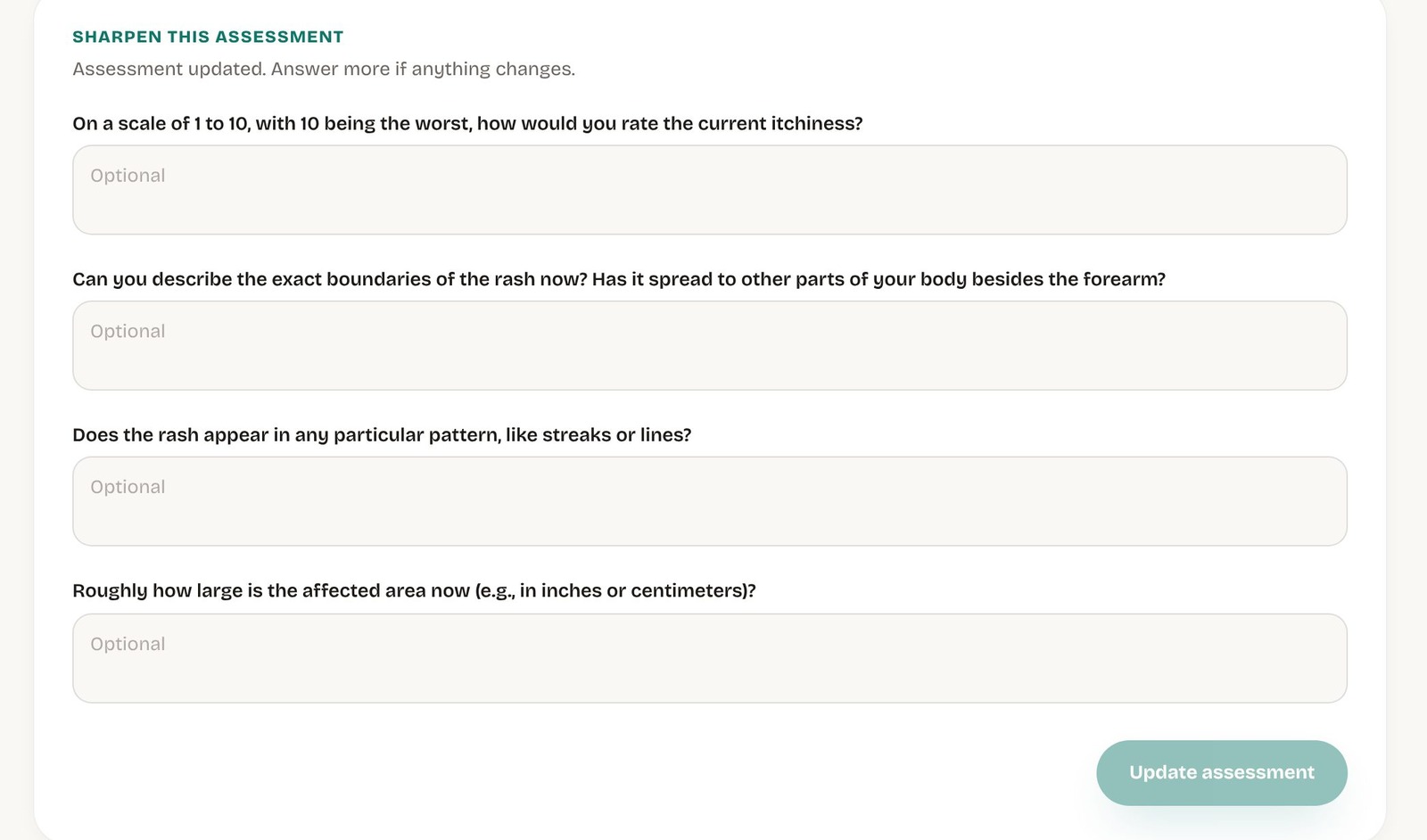
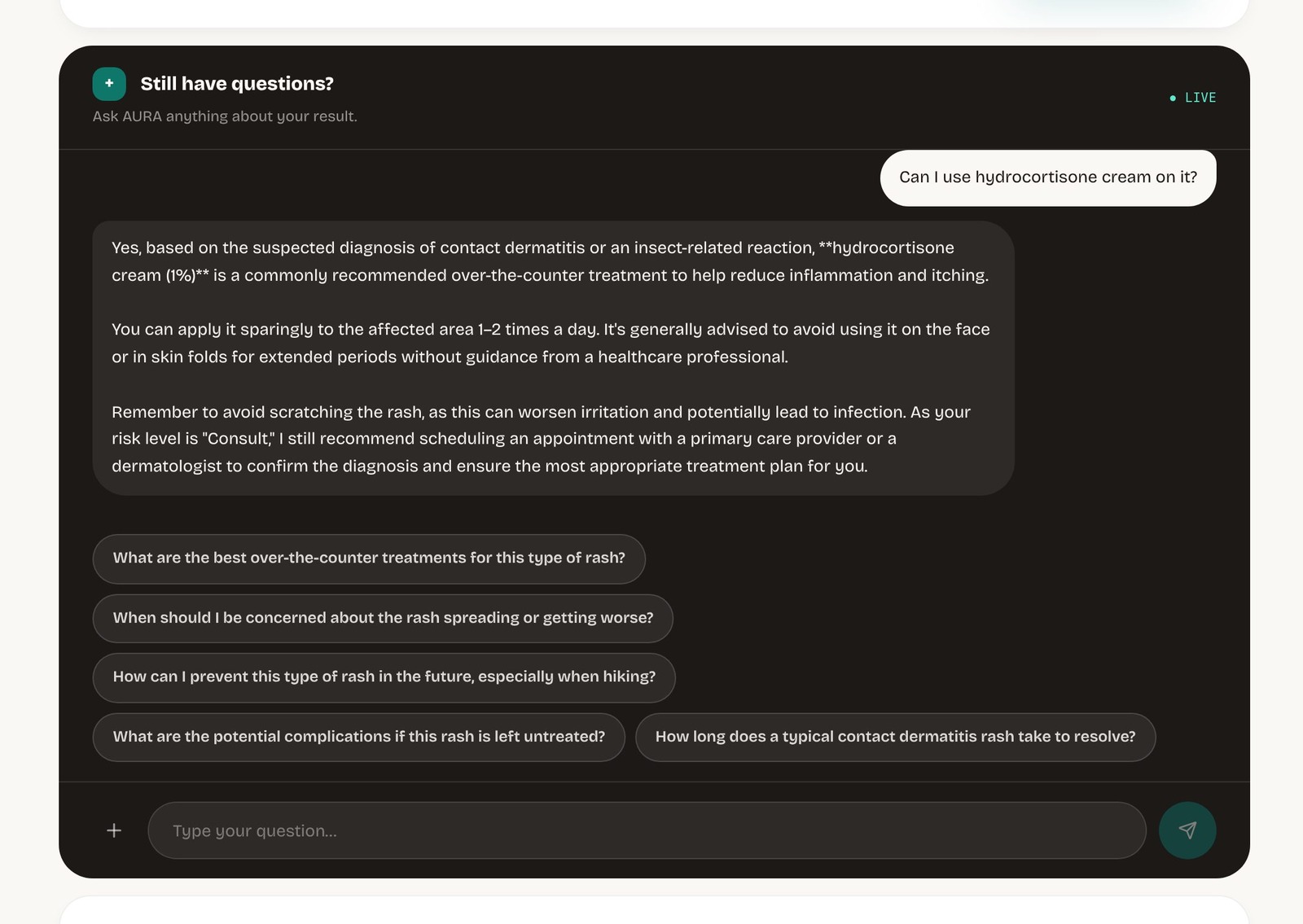
The app separates the first assessment, clarification questions and follow-up chat. A person can add missing details and request a fresh assessment, rather than treating every chat reply as a new assessment. Guest access keeps the first step simple, while account migration connects earlier guest activity to the signed-in user.
Outcomes & Technical Execution
The frontend uses React and TypeScript. An Express API handles authentication, request validation and Gemini calls, with MongoDB for saved records. Personal medical records have application-level encryption, password checks before access and access logging. Those controls have a defined scope; they are not a promise that every kind of data is encrypted in the same way.
Keeping the AI response useful
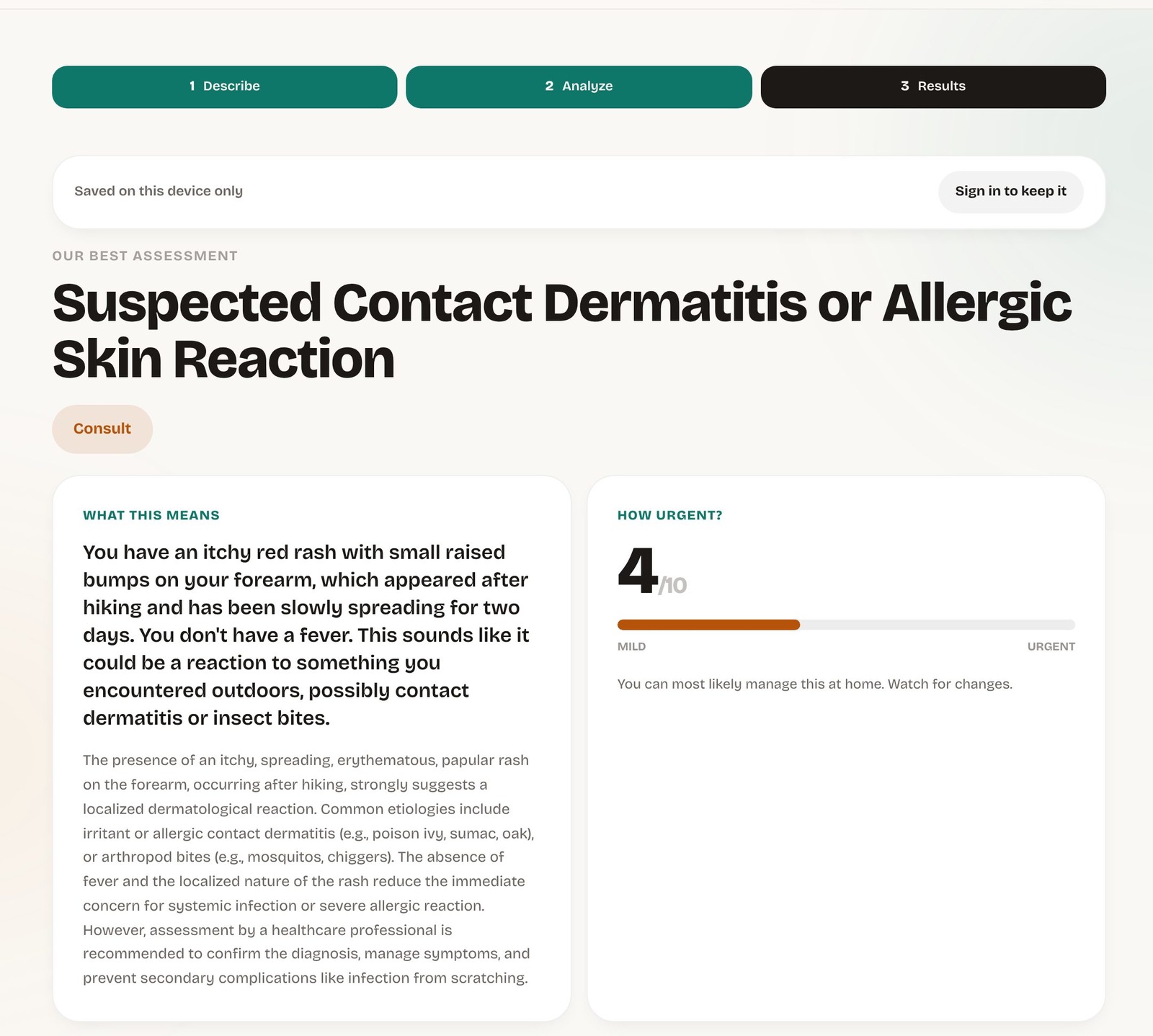
The response is structured so the interface can show guidance in clear sections. Clarification and reassessment are separate steps, which helps people see when new information changes the result. The model is an information aid, not a medical authority.
Voice input uses browser speech recognition to fill the written description. Image input is paired with text. Neither feature should be presented as a live consultation.
What I test and what remains limited
The test suite covers token handling, encryption and tamper detection, plus helpers for stored records. These checks support the implementation; they do not establish clinical accuracy or prove every live database and AI interaction works.
The screenshots below use demonstration data. They show a structured response, clarification questions and follow-up chat, rather than patient outcomes.